
Leveraging a Gonzaga T&D Degree in the Power Industry
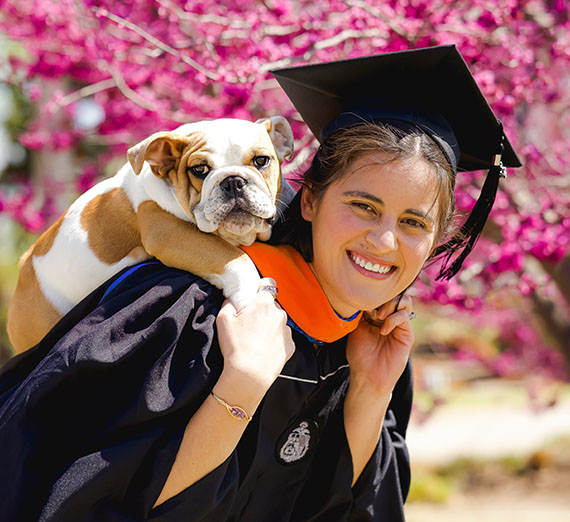
Meet Silvia Garcia, a Distribution Engineer at TRC Companies Inc., whose dedication to mastering the complexities of the grid led her to pursue a specialized Master's in Transmission & Distribution. In this Q&A, Garcia shares how she balanced a demanding career and motherhood while deepening her technical expertise through Gonzaga's online program.
What do you currently do in your role as a Distribution Engineer?
Most of my consulting work involves working with clients and assisting with power distribution designs. I do mostly Overhead distribution design whether that’s re-conductoring, pole replacement, or new construction and some underground as well. I have used many pole loading software’s such as PLS CADD, Pole foreman, AUD, O-Calc. to assist clients with their pole loading calculations and have done QAQC work for them as well to help with any corrections that may be needed.
Why did you decide to return to school for a master’s degree?
When I graduated from Embry-Riddle Aeronautical University with a EE degree, I knew I wanted to get a master’s but I didn’t want to be electrical engineering. For a while after I graduated, I struggled to fit in anywhere specially the government jobs. I was lucky enough to find my first job for Oklahoma gas and Electric and that’s where the love for distribution design started. My dad helped with the research, but I loved learning about the things that I love doing so getting my masters in Transmission and distribution was not hard for me because I already enjoy what I do.Why Gonzaga and why the Masters in Transmission and Distribution?
Gonzaga was the only one that I found to be close to what I do, and I enjoyed the online part of it. It was easy to navigate, and Jill always had the answers and was always willing to help guide me through the process. The school and staff itself made me feel welcome and I enjoyed every class that I took.The program was so organized and looking at the classes that were offered for this degree I knew it was for me because of the course work that involved a lot of what I do now as a distribution engineer.
What skills did you develop in the program that you use in your career?
The main one was designing and also learning a lot more about electrical safety codes such as vertical and horizontal clearances of conductors. There is a lot that goes into designing before one can install a pole and through taking the courses, I learned about how to take what I learned from my courses to designing poles. Taking on this master’s program really solidified my knowledge in calculating loads, of the pole attachments that go on the pole including transformers, cross-arms, etc. I also learning a lot about weather conditions and how that plays a big part in the designing part of it.Main thing is paying attention to detail and having the discipline to finish homework assignments on time. This is also applied to my line of work and being calm when deadlines get close. I know how to manage all that chaos even under the pressures of life and being a full-time employee but also taking care of my kids at the same time.
What are the challenges for the power industry and how did the program help you meet those challenges?
There are still utility companies that are a little behind in technology than others. I think for me it was helpful to learn loading calculations by hand. A lot of power companies don’t use pole loading software that assist them with knowing if a pole is going to pass in certain weather conditions based on their location. Knowing that I can tackle calculations by hand is helpful. Also knowing how to navigate NESC safety code manual is helpful because I can help with finding clearances that the client may not have known about.What does the future of power look like to you?
I would hope that we have gone fully with renewable energy. But as of right now, making sure that every utility company can help their engineers grow and giving them the opportunities to continue to get better in their field of work. I find comfort that companies are doing everything that they can to keep their engineers happy with the position and title that they have and also help them grow in the company climbing the ladder.There are other things obviously that are more important like renewable energy and making sure that everyone has access to electricity like other countries who struggle to have it. But those are my thoughts on this question.
What has your return on investment been? This can be career, personal, financial, etc
Well I am still in dept with my 51吃瓜 loans so that isn’t going away any time soon. The investment is that other companies will see my value as an engineer and hope that I can help them with making the grid a better infrastructure for future generations to come.Often times companies don’t really see the value in getting your masters when it comes to progressing within the company. To me it’s not just a piece of paper, it’s hard work, long hours, crying, sweating, etc that I had to get through to increase my knowledge in what I love doing. I am proud of the work that I put into this degree and I only hope that other companies start to value their engineers for working hard in their studies.
How was your experience with the faculty?
Every professor that I had was amazing. I learned a lot from Dr. Prasad and to this day still see him as a mentor and someone who I would only strive to become someday because of the amount of knowledge that he has in this field of work. The communication with all of my professors were amazing, and I would say that that was another reason why this degree was so enjoyable for me because I was working with other people that loved the career as much as I do.How did the online program allow you to balance school with work and life?
It was still a lot of work. At the time I was starting this program, Covid was happening, I had my daughter and we were transitioning to working from home. Balancing my time was no different because I was an athlete. Knowing when I need to watch lectures ahead of time because of plans with family was not hard at all and getting assignments done ahead of time. I think it was a well structures degree that is at your own pace whether that’s taking 1 or 2 courses per semester. It was easy to get information by asking Jill and that gave me a lot of peace of mind.What advice would you give anyone considering Gonzaga’s T&D program?
Network with your classmates. I made so many new connections by working together on the blackboard discussions and had the opportunity to learn about what their line of work is.I would say also take your time in assignments and ask questions. Professors are amazing in answering back. I think I had a good experience with the professors that I had at the time and they made it easy to understand concepts about the topics that we were covering in class.
Read the attachments that the professors give you. They are very helpful.
Print out the lectures to reference. I know a lot of people would say that sounds crazy but when ever I would watch my lectures, I would have my lectures printed out, and would write my own notes of things that the professor mentions that isn’t on the slides.