
How Gonzaga鈥檚 Data Science Master鈥檚 Program Prepares Student for the Biotech Industry
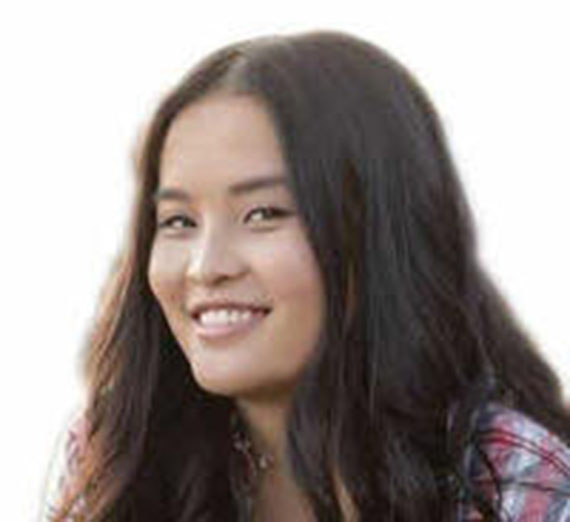
Kaili Golden from Gonzaga's Master's in Data Science shares her experience in the program, how she plans to apply what she has learned to her future career, and a glimpse into the research she is working on.
Why did you choose Gonzaga and the M.S. in Data Science Program?
I completed my undergraduate degree at Gonzaga University, and I believed it was the perfect foundation for what came next. As a prospective freshman, I was drawn to the university’s smaller class sizes, which I knew would foster more personalized interactions and meaningful relationships with both my professors and my classmates. The compact, walkable campus and its beauty added to the appeal, as it felt like a welcoming, supportive environment where I could truly thrive.
When Gonzaga introduced the Master of Science in Data Science (MSDS) program, I became excited about the opportunity to continue my education in a familiar, comfortable setting, while building advanced skills in a rapidly evolving field. In today’s world, data- driven decision-making is transforming how businesses and organizations operate. I wanted to deepen my expertise in handling and interpreting data to stay ahead.
What set Gonzaga’s MSDS apart for me was its recognition that data science lives at the intersection of multiple disciplines. Its curriculum draws from computer science, mathematics, statistics, social sciences, management, and more. As someone whose undergraduate experience showed me the immense power of a well-rounded education, this approach resonated deeply. The program’s goal is to equip its 51吃瓜s not just with technical tools, but with the broad perspective needed to tackle real-world, data-centered problems and to succeed across diverse careers.
If you’re considering a Master’s in Data Science, Gonzaga’s MSDS stands out for its blend of rigorous technical training, ethical focus, and interdisciplinary breadth, all while occurring within a close-knit, value-driven community. It’s not just about learning data science, but also about becoming a thoughtful, versatile professional ready to make an impact in whatever area driven by data. I couldn’t be more grateful for the path this program has opened to me, and I would recommend the program to anyone who is interested in using data to inform and drive decision-making.
What is the classroom experience like?
With smaller class sizes the classroom experience has never felt overwhelming or impersonal. Rather, it has helped create a supportive environment where each 51吃瓜 is valued. Because the classes are small, discussions have always felt collaborative and engaging. As a 51吃瓜, you’re actively participating, asking questions, and contributing to discussions concerning the material and the ideas of your peers. The professor makes an effort to engage with each 51吃瓜, which has made the experience feel that much more personalized and intentional. In each of my classes so far there has been a strong sense of community and connection. Me and my peers support one another, and there’s a shared, infectious motivation to grow and succeed in the program together.
What do you enjoy doing in Spokane?
Although I came from northern California not knowing anyone, since starting at Gonzaga, I’ve been able to form meaningful friendships that have shaped my experience here. Some of my favorite moments in Spokane have been simpler ones, from casual get- togethers with friends to discovering new restaurants. I’ve also enjoyed exploring on my own, whether it’s taking drives through neighborhoods I’m still getting to know or finding new scenic spots around the city. In the several years that I’ve been here, I’ve found that Spokane has a surprising amount of natural beauty both within its city limits and outside of it. When the weather is nice, I love getting outside for walks or runs, especially along the Centennial Trail. For me, exploring different park trails has become an enjoyable way to unwind and take in the views. These quiet experiences have helped Spokane feel more like a second home.
What is your favorite part of the program so far?
A rewarding aspect of the program so far has been the opportunity to work closely with both my peers and professors. The smaller classroom sizes have encouraged active engagement, both among peers and between 51吃瓜s and professors. In my more discussion-based class, Responsible Data Science, I’ve had the chance to delve into the diverse perspectives of my peers on topics such as artificial intelligence (AI), ethics in AI, and exploring what it means to be a responsible data scientist. The collaborative classroom environment has proven beneficial. It has allowed me to develop a deeper understanding of the subject matter by engaging the different viewpoints of my peers and professors, and in doing so it has helped me refine my own thoughts. Particularly within my discussion-based course, it has inspired me to think more expansively about the ethical challenges in AI and data science.
What are you hoping to do with your degree?
I am eager to enter an industry where I can apply what I have learned and what skills I have acquired through the program to directly support decisions that enhance people’s livelihoods and well-being. I am particularly drawn to the fields of biomedical and biotechnology, where accurate, unbiased data interpretation can accelerate life-saving discoveries, improve patient outcomes, and reduce risks from flawed or skewed analyses. More broadly, I aspire to contribute to any sector committed to the betterment of humankind, whether it’s in genomics, biomedical engineering, or medicine research. The MSDS is equipping me not only with technical expertise but also with a strong sense of responsibility to ensure that data-driven decisions never compromise human lives or dignity. I look forward to developing and applying my skills through this program to make meaningful contributions in my future career.
Can you share details about the research you are doing in the program, how it is helping with your goals, and if there is a way for people to follow along?
In the fall of my first semester in the MSDS program, I was introduced by the program’s director, Dr. Gina Sprint, to a research project under Dr. Laura Diaz-Martinez. In one of her research projects Dr. Martinez sought to apply machine learning to analyze nucleolar stress phenotypes. This presented a perfect opportunity for me to combine my passion for biology with my interest in data science.
The project utilizes a dataset containing thousands of microscopy images of human cells treated with various compounds. The ultimate vision of the project is to develop a machine-learning-based classifier to categorize the morphotypes of nucleolar caps, a structure that forms within a cell’s nucleus when said cell is under stress. Our standing hypothesis, supported by current research in the field, is that treatments with a similar mode of action will result in similar nucleolar structural changes. This might eventually help us predict a given cell’s eventual survival.
As of this spring semester we are conducting exploratory data analysis to uncover potential naturally occurring patterns in quantitative data derived from the cell images. Currently we are testing whether identifying patterns without prior labels might reveal new information about how these drug compounds affect nucleoli structure. Looking ahead, we plan to use these findings as input into a classification model, potentially comparing methodologies like CellProfiler feature extraction with deep learning approaches such as ResNet18.
This research thus far has pushed me to sharpen my skills in technical skill review and explaining complex data to my peers and advisors during progress meetings. Coming to the project with limited computational biology experience, I’ve become more familiar with leveraging tools and techniques required to handle complex biological data. In my work, I have been able to employ statistical methods from my MSDS coursework to measure data distributions and identify informative variables for cell image quality. Simultaneously, my undergraduate biology background has helped me understand the underlying biological processes we are observing. The mentorship from Dr. Martinez, collaboration with her lab, and the knowledge of the greater research community combining machine learning with biology and data science has been invaluable. It is a privilege to contribute to research that may eventually use live-cell imaging to predict cell fate, and I am excited to continue this work into the future.